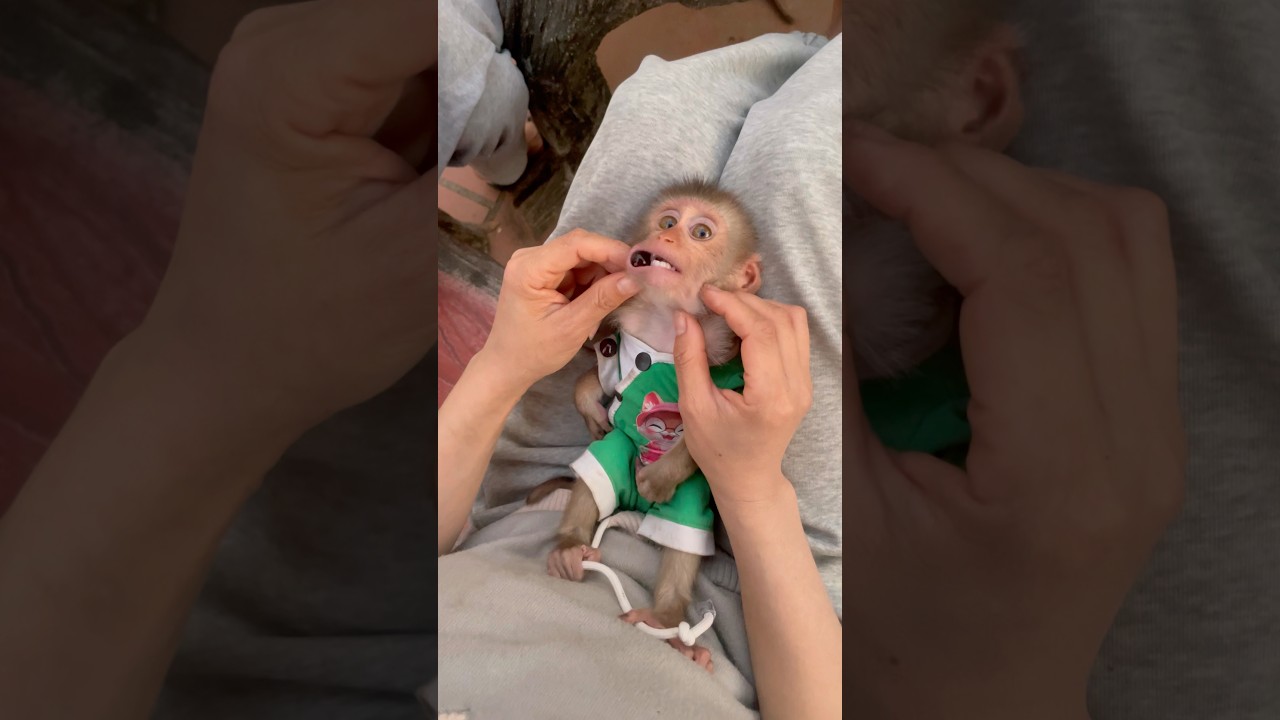
The title promises a tender moment: a baby monkey swallows something it shouldn’t have, and its mother comes to the rescue. But in every frame of the video, there is no mother monkey anywhere in sight. There are only two adult human hands, reaching toward the face of a small monkey dressed in a green outfit.
The clip comes from a YouTube channel called Benny the Baby Monkey, which describes “Benny” as a playful, adorable baby monkey with a big heart and a cheeky smile, inviting viewers to join him on his daily adventures as he plays, learns, cuddles, eats bananas, and explores the world around him. The channel posts new videos every week and markets itself as family-friendly entertainment.
What the footage actually shows
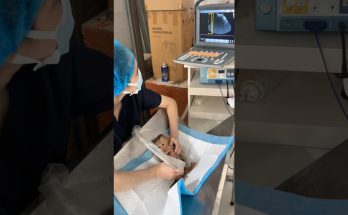
Four stills pulled from the short tell a consistent story. A small, pale-furred infant monkey — built like a young macaque, with the wide eyes and thin limbs typical of that age — lies on a person’s lap or shoulder outdoors, near what looks like a tree trunk and a gray fleece blanket. It’s dressed in a two-piece green outfit with a cartoon graphic on the front.
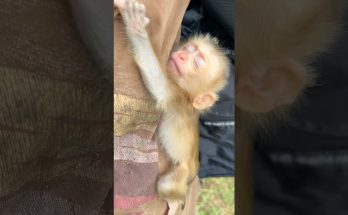
Throughout the clip, a pair of human hands works around the animal’s mouth and jaw. In one frame the monkey’s mouth is held open, teeth visible, eyes rolled wide. In another, its head tips back against the blanket while the hands continue working near its face. In the final still, the monkey appears to grimace or vocalize with its mouth open while the hands remain close to its chin.
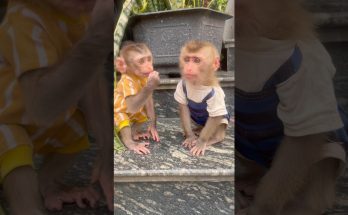
Nowhere in the four frames is there a second monkey, adult or otherwise. The “mother” referenced in the title does not appear to be present in any visual sense — unless the title is using the word loosely to describe the human handler. That gap between the caption and the picture is worth pausing on before passing the clip along.
A familiar pattern across social media
Videos like this one sit inside a much larger, well-documented genre: infant macaques, dressed in doll-like clothing, filmed in close, affectionate interactions with human caretakers rather than with other monkeys. Animal welfare researchers have been studying this genre for years, and their findings explain why a clip like this draws scrutiny even when nothing overtly alarming happens on camera.
A 2022 investigation by Lady Freethinker and Action for Primates described tiny infant macaques dressed in colorful, doll-like outfits sitting fidgeting adorably in a row, and similar videos from other channels showing clothed “pet” monkeys dancing, spinning in circles and playing with toys as their seemingly loving owners talk to them softly, smile, or laugh. The same investigation found conditions behind the scenes that contradicted the cheerful footage: animals forced into cramped, barren wire cages with no access to food and water, and displaying stress-based behaviors.
A veterinary voice from that same organization put the underlying welfare concern plainly: Forcibly removing and depriving infant monkeys of their mothers and raising them in captivity in unnatural conditions is extremely cruel and will result in abnormal behavior and development and lead to severe psychological and physical problems, said co-founder Sarah Kite.
A separate, larger analysis by the Asia for Animals Social Media Animal Cruelty Coalition looked at more than a thousand posts over 18 months and found the problem goes well beyond a handful of bad actors. The video clips examined in that study had more than 12 billion combined views, and researchers noted that macaques are used in this content because of their perceived close similarities to human babies.
Government officials in Southeast Asia, where many of these monkeys originate, have also raised alarms about the broader trend. Authorities at Cambodia’s Angkor World Heritage Site say the abuse of monkeys there is a growing problem as people look for new ways to draw online viewers, with one official noting that monkeys should be living in the wild rather than being treated like a domestic pet. A related investigation reported by CBS News found that hundreds of customers in the U.S. and other nations had joined social media groups used to share disturbing monkey content and were paying to see animals mistreated, even as scores of ordinary-looking clips of cute monkeys jumping and playing remain on the platforms, generating thousands of views and subscribers.
What this does not prove about this specific video
None of that background confirms anything specific about the Benny the Baby Monkey channel or about this particular clip. The still frames show a baby monkey being handled close to its face and mouth; they do not by themselves show mistreatment, and the channel’s own description frames its content as affectionate care rather than anything else. It is also possible the monkey was genuinely uncomfortable after swallowing something and the human handler was trying to help, much as the title suggests — just without an actual monkey mother involved.
What can be said with confidence is narrower: the video’s own title describes a maternal rescue that the visual evidence does not show, the animal appears to be living with and being raised primarily by humans rather than other monkeys, and that pattern matches a type of content that wildlife researchers and welfare groups have flagged repeatedly over the past several years as worth close, skeptical attention rather than an automatic “aww.”
Why it matters
Cute, closely-filmed monkey content performs extremely well online, and that popularity is itself part of the story. Research groups say some creators profit directly from ad revenue or viewer payments tied to this type of footage, which creates an incentive to keep producing more of it regardless of what it costs the animal involved. A single short video can’t settle whether any particular channel is acting responsibly. But it can remind viewers to look past the caption and ask what the footage is actually showing — and who, or what, is missing from the frame.
[The video is titled The baby monkey swallowed something and its mother took it out for itand is posted by the YouTube channel Benny the Baby Monkey., All four available still frames show only human hands interacting with the baby monkey; no mother monkey appears in any frame., The channel’s own YouTube description presents Benny as a pet-like baby monkey that plays, cuddles, and eats bananas in weekly videos., Independent investigations by Lady Freethinker, Action for Primates and the Asia for Animals Social Media Animal Cruelty Coalition have documented widespread concerns about infant macaques being raised by humans and filmed for online content., Officials at Cambodia’s Angkor World Heritage Site and researchers cited by CBS News have described a broader, ongoing problem of monkeys being exploited for social media content.]