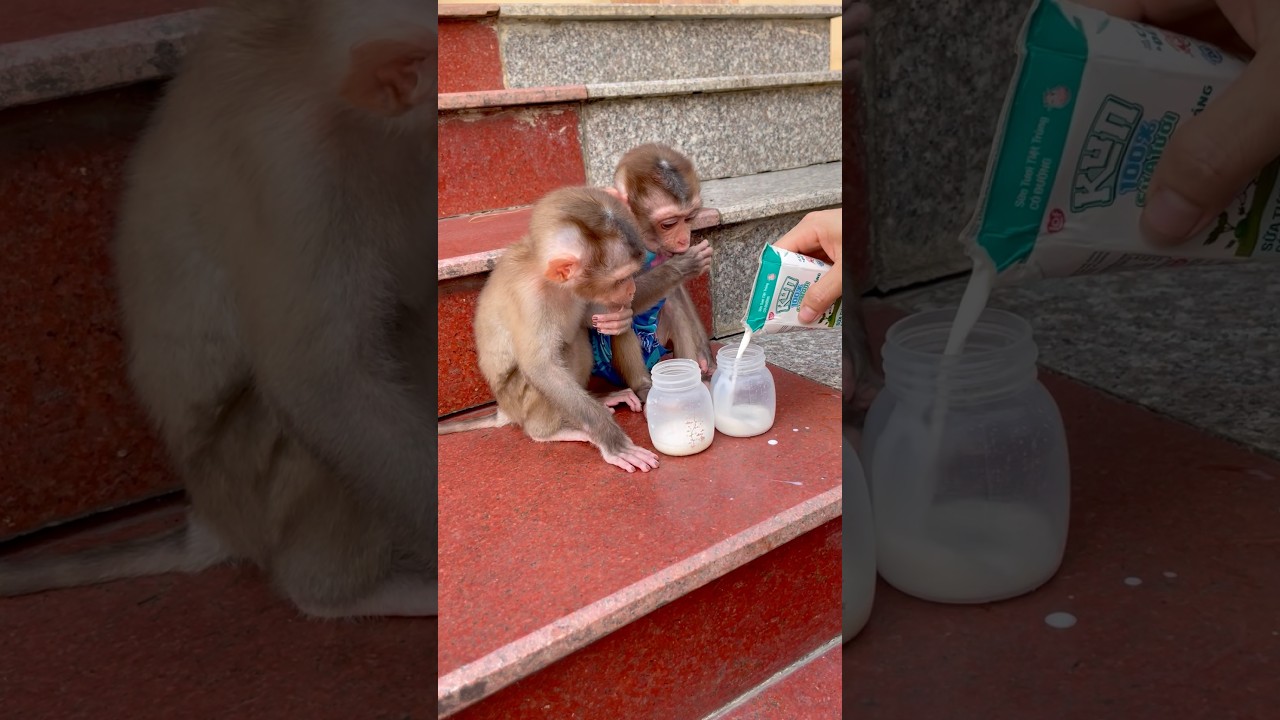
Two small monkeys sit side by side on a flight of red-tiled steps. A human hand reaches into frame holding a carton of milk and pours it into a pair of clear plastic jars set between the animals. Both monkeys lean in close, watching the liquid stream down, their small fingers resting near the rims of the jars.
That’s the entire scene captured in a short video titled “Monkey cute ,” posted to YouTube Shorts by a channel called Benny the Baby Monkey. No description or captions accompany the clip, so everything known about it comes from what the footage itself shows.
What the footage shows
Across the four frames available from the video, the sequence is simple and consistent. It opens with the two young monkeys already seated together on the steps, a carton of milk visible in a person’s hand just out of the main shot. In the middle frames, the milk is being poured directly into the two jars while both animals watch closely, one leaning forward with a hand braced on the stone. By the later frames, the jars appear to hold less liquid, and the monkeys remain focused on them, sitting low and still.
The milk carton carries Vietnamese-language text, and the red-and-gray tiled steps resemble the kind of outdoor stairway common at homes, temples, or informal outdoor settings in parts of Southeast Asia. Beyond that, nothing in the frames identifies the location, the date the video was filmed, or who is holding the carton.
The monkeys themselves appear young, with the light brown coats and bare pink-toned faces typical of juvenile macaques, a genus of monkey found across South and Southeast Asia. Their exact species cannot be confirmed from still images alone.
A familiar genre of online animal video
Clips showing young macaques eating, drinking, or going through human-style routines in front of a camera have become a recognizable category on YouTube and other platforms, particularly from channels based in Vietnam and neighboring countries. Researchers who study this content describe it as a distinct and fast-growing niche.
A 2024 analysis of the industry described channels that upload multiple videos daily featuring infant macaques trained to perform human-like behaviours on camera, often under duress, including wearing baby clothes, eating junk food, interacting with toys, and walking bipedally as a child would. The same report noted that scenarios are often recycled with slight variations, such as eating ice cream from a truck or machine, to maximize content output.
That same analysis cautioned that this type of content carries real-world consequences beyond the screen. It found that dressing macaques in baby clothes and feeding them candies and fried foods can mislead viewers, especially children, into believing such practices constitute proper animal care, while also normalizing exotic animals as house pets and fueling demand for their trafficking and sale.
Wildlife protection groups working in Vietnam have raised similar concerns about how these pet macaques are obtained and kept in the first place. Education for Nature–Vietnam, a conservation group that works with authorities on wildlife crime, has noted that every year, thousands of macaques are poached from the wild and trafficked to meet demand for use as pets, in traditional medicine, or as lab testing animals. The group has also pointed out that showcasing pet macaques on social media has become a profitable, if often illegal, business for some keepers.
None of this confirms anything specific about the animals in this particular clip, their living situation, or how they came to be in front of a camera. The footage itself shows two calm, seated monkeys focused on a simple feeding moment, with no visible sign of distress in any of the available frames.
What remains unclear
Several basic facts about the video are not established by the material available. The exact species of the two monkeys, their age, their location, who owns or cares for them, and whether the channel that posted the clip is affiliated with any of the commercial “animal content” operations documented by researchers are all unknown. The reason milk was offered in jars rather than bottles, and whether this is a regular practice for these particular animals, also cannot be determined from the clip alone.
Why it matters
Short animal clips like this one travel fast precisely because they’re simple and visually appealing. But the growth of monetized “baby monkey” content has drawn sustained attention from conservation and animal welfare researchers, who argue that even the gentler-looking videos in this genre normalize keeping wild primates as props for entertainment. Viewers who enjoy this kind of footage are increasingly being encouraged to ask a basic question before sharing it further: where did these animals come from, and who is actually caring for them once the camera stops rolling?

2 Comments on “Baby Monkey Featured in Short Video Clip Online”