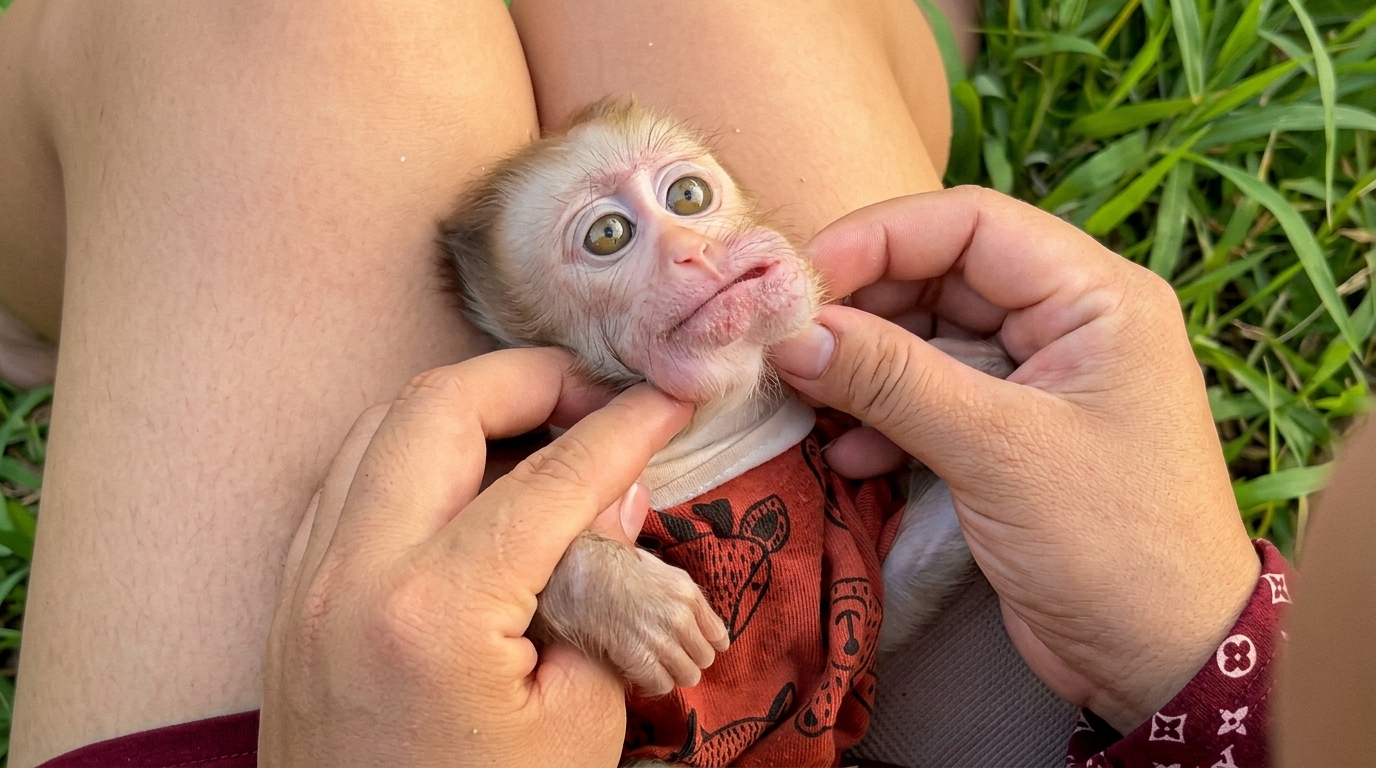
Short-form animal videos frequently capture millions of views by highlighting expressions that mirror human emotion. A viral eight-second YouTube Short titled “Xuxu so cute 🥰 #monkey”—shared on the channel Thuyền Trưởng XSMB at http://www.youtube.com/watch?v=z_neC9MG2Bk—has drawn over eleven million views by focusing on an endearing physical interaction: a caretaker gently squishing and massaging the cheeks of an infant macaque.
An Eight-Second Study in Gentle Touch
Despite its quick duration, the video presents a calm and affectionate vignette of human-animal interaction:
- [00:00] – Settled on the Lap: Dressed in a small red strawberry-patterned shirt, baby Xuxu rests comfortably on her caregiver’s lap against an outdoor grassy backdrop. Her wide, luminous eyes look directly toward the camera with calm curiosity.
- [00:02] – The Cheek Squish: The caregiver uses both hands to gently pinch and lift the baby monkey’s cheeks. The pliable facial skin stretches softly, creating an exaggerated, adorable grimace that resembles a smiling human toddler.
- [00:05] – Reflexive Grasping: As the caretaker continues massaging her face and chin, Xuxu raises her delicate fingers toward her mouth and hands, fluttering her tiny paws in a relaxed grasping motion.
- [00:07] – Trust and Serenity: Rather than pulling away or baring her teeth in defensive warning, the infant remains relaxed, basking in the physical contact while background conversation gently hums.
The Biology Behind Flexible Cheeks and Primate Grooming
While internet audiences view the cheek-pinching as playful cheekiness, the physiology and behavior on display are rooted in primate evolutionary biology:
- Cheek Pouches (Buccal Pouches): Macaques (Macaca) belong to the subfamily Cercopithecinae, which is anatomically distinguished by expandable cheek pouches. In the wild, these pouches allow monkeys to rapidly harvest and store food before retreating to a safe canopy to chew. Because of this specialized anatomy, their cheek tissue and facial musculature are naturally elastic and flexible.
- Tactile Reassurance and Allogrooming: In wild troops, facial touch and social grooming (allogrooming) are essential for troop cohesion. Gentle touching, stroking, and parasite inspection release oxytocin and endorphins, lowering heart rates and fostering social trust between individuals.
- Facial Communication: Primate faces are among the most expressive in the animal kingdom. While intense grimacing can signal fear or submission in adult macaques, the relaxed eye contact and soft mouth movements seen in young hand-reared infants denote passive comfort and trust.
Why the Internet Can’t Look Away
The video’s viral appeal relies on universal psychological triggers:
- The Cheek-Pinching Trope: For human viewers, the action immediately evokes nostalgic memories of affectionate parents or grandparents pinching a baby’s cheeks.
- Kindchenschema (Baby Schema): Xuxu’s oversized, round eyes, small button nose, and miniature fingers strongly trigger human nurturing instincts, making the fleeting clip instantly shareable.
Ultimately, the short at http://www.youtube.com/watch?v=z_neC9MG2Bk highlights the gentle role of touch in early animal development. Through mutual warmth and calm interaction, it showcases the profound emotional bonds that cross species lines.

One Comment on “Squishy Cheeks and Primate Smiles: Behind “Xuxu’s” Viral Grooming Moment”