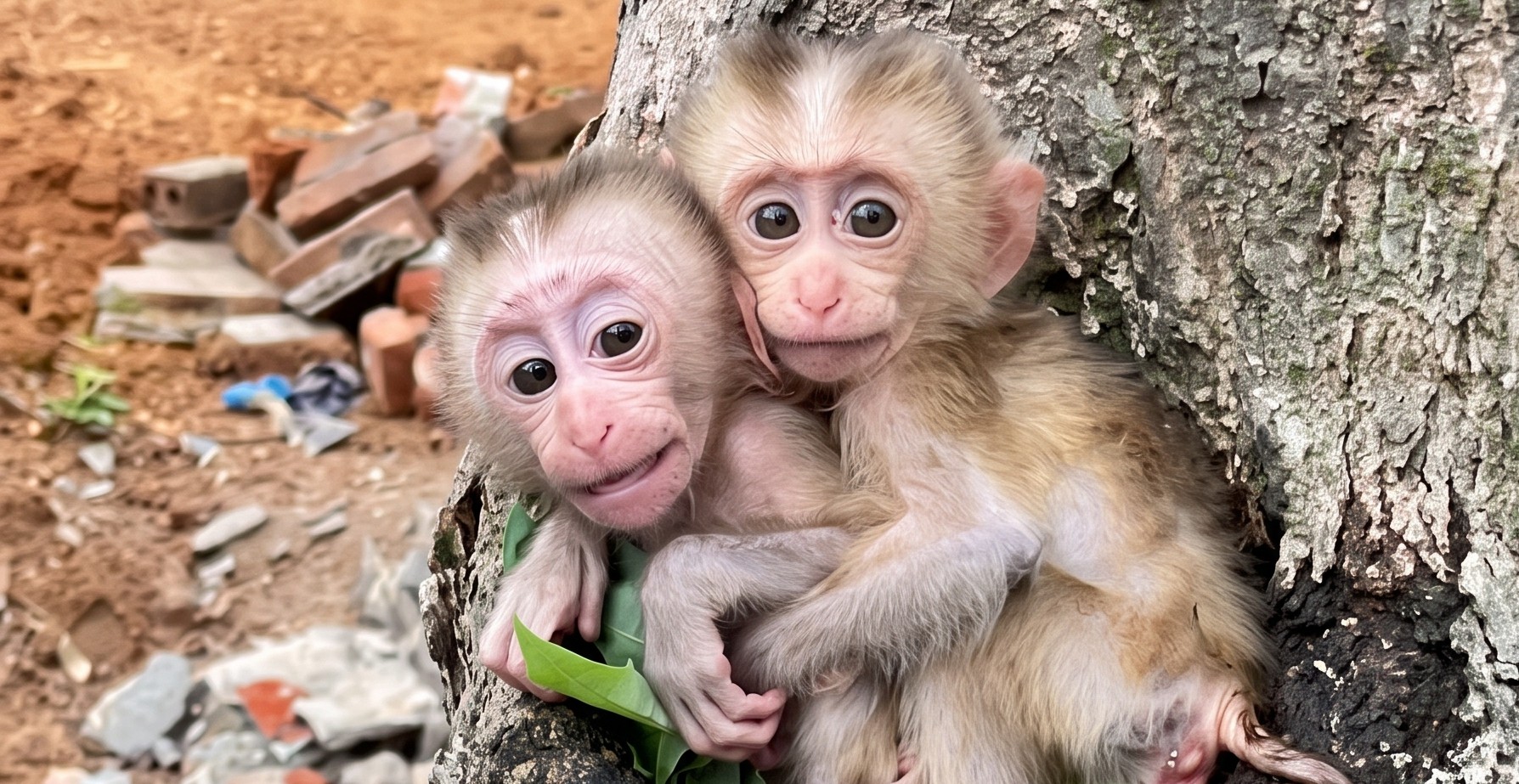
Across social media, fleeting clips of infant wildlife often evoke immediate tenderness. A captivating eight-second YouTube Short titled “2 cute monkey”—shared on the channel Thuyền Trưởng XSMB at http://www.youtube.com/watch?v=5CqATn3prcE—presents a heartwarming visual of two tiny infant macaques huddled tightly together inside the natural hollow of a tree trunk.
Despite its simplicity, the clip captures an essential truth about primate survival: the deep, instinctive drive for warmth, companionship, and physical refuge.
An Eight-Second Study in Mutual Comfort
The brief video captures an intimate and vulnerable wildlife scene in a few seconds:
- [00:00] – The Natural Cradle: Two infant macaques sit nestled inside a hollowed-out tree trunk, elevated slightly above ground level. The one on the left rests against a soft green leaf, staring outward with wide, curious eyes.
- [00:02] – The Protective Embrace: Beside it, the second monkey wraps its right arm securely around its companion’s chest and shoulder. The grip is firm yet tender, forming a tight interlocking pose that provides mutual stability inside the narrow bark cavity.
- [00:05] – Shifting Vigilance: As gentle music plays, the monkey on the right shifts slightly, turning its head to nuzzle close to the tree wall before looking back.
- [00:07] – Shared Calm: Both infants remain comfortably bundled together, looking out into their surroundings from the perceived safety of their wooden sanctuary.
The Biology of Huddling: Clinging for Survival
While the scene appears irresistibly cute to human viewers, the behavior on display is grounded in evolutionary necessity.
- Thermoregulation and Heat Conservation: Infant primates have minimal body fat and a high surface-area-to-volume ratio, making them susceptible to rapid heat loss. By pressing their bellies together and curling into a tree crevice, the pair minimizes thermal exposure to wind and ambient air.
- Contact Comfort and Stress Reduction: In wild primates, physical contact is the primary mechanism for emotional regulation. Touching another living body lowers cortisol levels, stabilizes heart rates, and provides sensory reassurance in the absence of an adult mother.
- Micro-Habitats as Defensive Shelters: Tree hollows and natural bark depressions serve as essential resting nooks for small arboreal animals. They shield vulnerable young from aerial predators, conceal them from ground threats, and offer reliable footholds for developing limbs.
Why the Image Captivates Audiences
The scene resonates widely because it taps into the universal psychology of the Kindchenschema (baby schema)—large dark eyes, small rounded faces, and fragile limbs that involuntarily spark protective instincts. Combined with the familiar narrative of siblings or peers sheltering each other against the world, the image creates an instant emotional bond with viewers.
At its core, the clip from http://www.youtube.com/watch?v=5CqATn3prcE serves as a touching reminder of the natural world. Whether foraging across canopy branches or resting quietly in a weathered tree hollow, young primates depend fundamentally on trust, touch, and mutual shelter to navigate their earliest days.