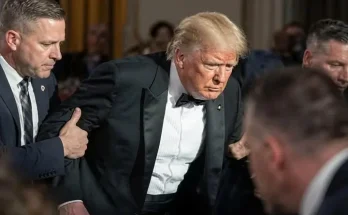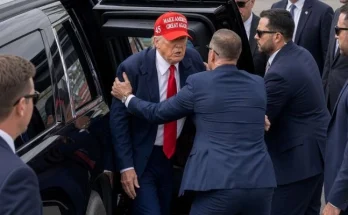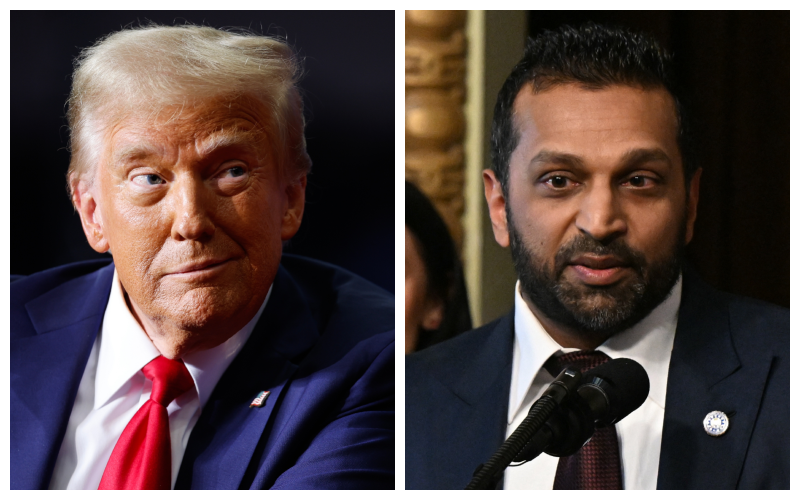
More than two years after a 20-year-old gunman opened fire at a Trump campaign rally in Butler, Pennsylvania, federal investigators still cannot say why he did it. A fresh batch of FBI records, released to Congress this fall, adds new detail to the life of shooter Thomas Matthew Crooks — a secret online alias, dozens of digital accounts, and an anonymous donor who paid for his cremation — without closing the central question that has hung over the case since July 13, 2024.
Senate Judiciary Committee Chairman Chuck Grassley, R-Iowa, shared the trove of documents with multiple media outlets, detailing Crooks’ upbringing, behavior, and actions in a series of interviews with those close to him. The records were part of Grassley’s ongoing inquiry into the attack, in which Crooks fired eight rounds from a nearby rooftop, grazing then-candidate Donald Trump’s ear and killing volunteer fire chief Corey Comperatore.
What the new records show
The documents focus heavily on how Crooks tried to cover his tracks in the months before the rally. Thomas Matthew Crooks used the alias ‘Bob Dole’ for online purchases in the months before he opened fire at Donald Trump’s July 2024 rally in Butler, Pennsylvania, with packages sent to his parents’ home under the pseudonym. The packages contained components, tools and supplies intended to increase the capacity of his rifle.
According to his father’s FBI interview, the reasoning behind the fake name was almost mundane. After his father’s bank account was hacked, Crooks believed that if he used a pseudonym for online purchases, along with a virtual private network, it would prevent hackers from tracing the purchases back to the accounts — logic his father disputed, pointing out that the charges would still land on a real account either way. Thomas apparently dismissed his dad’s logic and continued to use pseudonyms to make online purchases in an attempt to avoid having his accounts compromised.
The habit went beyond shopping. Thomas taught his father how to use a VPN service and a privacy-focused browser, which he said made users “less likely to be compromised by outside actors,” and his father recalled his son using encrypted email providers.
The father’s interview, conducted two days after the shooting, also sketched a portrait of a withdrawn young man. Matthew Crooks told investigators, “When Thomas was born he did not scream and he was always quiet from that point on,” and said his son “never really had a father/son bond” with him. Elsewhere in the file, Crooks’ father described his son’s political views as mixed and said the family saw no warning signs that he would carry out the attack, leaving them “racking” their brains afterward to understand his actions.
Digital trail, no foreign link
Much of the public argument since the shooting has centered on how thoroughly the FBI chased Crooks’ online footprint. Investigators have said the search was extensive. Agents examined 35 online accounts linked to Crooks, including social media, financial records and multiple foreign-based email accounts registered in Germany and Belgium, fully accessing the foreign accounts through international cooperation, and found none of the accounts contained evidence of coordination with foreign entities.
FBI officials have pushed back on suggestions that encryption blocked their work. “There has been reporting to inappropriately and incorrectly state that there was encryption that the FBI was not able to get into — that is not true. We have been able to get into every single account,” a senior official told Fox News Digital. An official added that whenever a lead pointed to an overseas connection, the FBI reached out to the relevant foreign governments and confirmed no foreign tie was found.
Still, the motive itself has eluded investigators. Investigators found Crooks made limited political statements online in 2019 and 2020, when he was 16, and that he had searched for details about Lee Harvey Oswald and the Butler rally location before the attack, but left no manifesto explaining his motive. The FBI has previously said Crooks carefully planned the attack, but investigators have struggled to establish a definitive motive.
An anonymous cremation
One of the more striking details in the newly surfaced records concerns what happened to Crooks’ body after he was killed by a Secret Service countersniper. FBI records turned over to the Senate reveal an unidentified donor paid to cremate Crooks just 10 days after Butler, a rushed disposal that alarmed lawmakers. A lawyer for the family told investigators that an anonymous donor covered the cremation, and the records do not name the donor or explain the payment.
The documents don’t resolve who paid or why, and no official account has filled in that gap publicly.
Congress keeps pushing
House Oversight Committee Chairman James Comer, R-Ky., welcomed the release but made clear lawmakers aren’t finished digging. Comer told reporters he’s glad this information is being made public, but members are “still not fully satisfied.” Grassley’s committee has treated the Butler case as a test of whether federal agencies will turn over records voluntarily or only under sustained pressure from Capitol Hill.
That frustration isn’t limited to the FBI. A separate, longer-running fight has centered on the Secret Service’s handling of the rooftop that gave Crooks a clear line of sight to the stage. So far, it doesn’t appear that anyone has been or will be fired, although the agency’s director at the time swiftly resigned; six staffers were disciplined with suspensions ranging from 10 to 42 days without pay. The lack of firings has drawn criticism, with a Senate report concluding more than six people should have been disciplined and that the penalties were too weak to match the severity of what happened.
Kentucky Sen. Rand Paul, who chaired a separate Senate investigation into the agency’s failures, has been blunt about the lack of consequences. Paul said “What happened in Butler was not just a tragedy — it was a scandal,” adding that despite the agency’s failures, “no one has been fired.”
A case still open in more ways than one
The human toll of that July evening has also continued to shift. Crooks struck three rallygoers in addition to grazing Trump. One victim was killed instantly, and a second rallygoer who was wounded that day died in 2026 from injuries tied to the shooting — a reminder that the case’s consequences are still unfolding years later. Comperatore, the volunteer fire chief who died shielding his family, remains the attack’s most widely known victim.
Investigators maintain that Crooks acted alone. FBI officials have said 485 employees were involved in some capacity in the investigation, that agents conducted more than 1,000 interviews connected to the case, reviewed 2,000 submitted tips, and served more than 10 search warrants and 100 subpoenas. Whether that scale of effort will ever produce a clear answer on motive remains uncertain. For now, the documents released this fall add texture to who Crooks was — a quiet, privacy-obsessed young man who meticulously hid his purchases from the people closest to him — without answering why he climbed onto that roof.
What happens next
Grassley’s committee has signaled it will continue requesting records, and Comer’s panel has said it intends to keep pressing federal agencies for additional documentation. No legislative or executive timeline has been set for when, or whether, a fuller account of Crooks’ motive might emerge. Separately, congressional oversight of the Secret Service’s post-Butler reforms continues, with lawmakers from both parties saying the agency’s internal discipline process has not matched the scale of its 2024 failures.