I. Pre-Rally Security Sweep Leads to Arrests
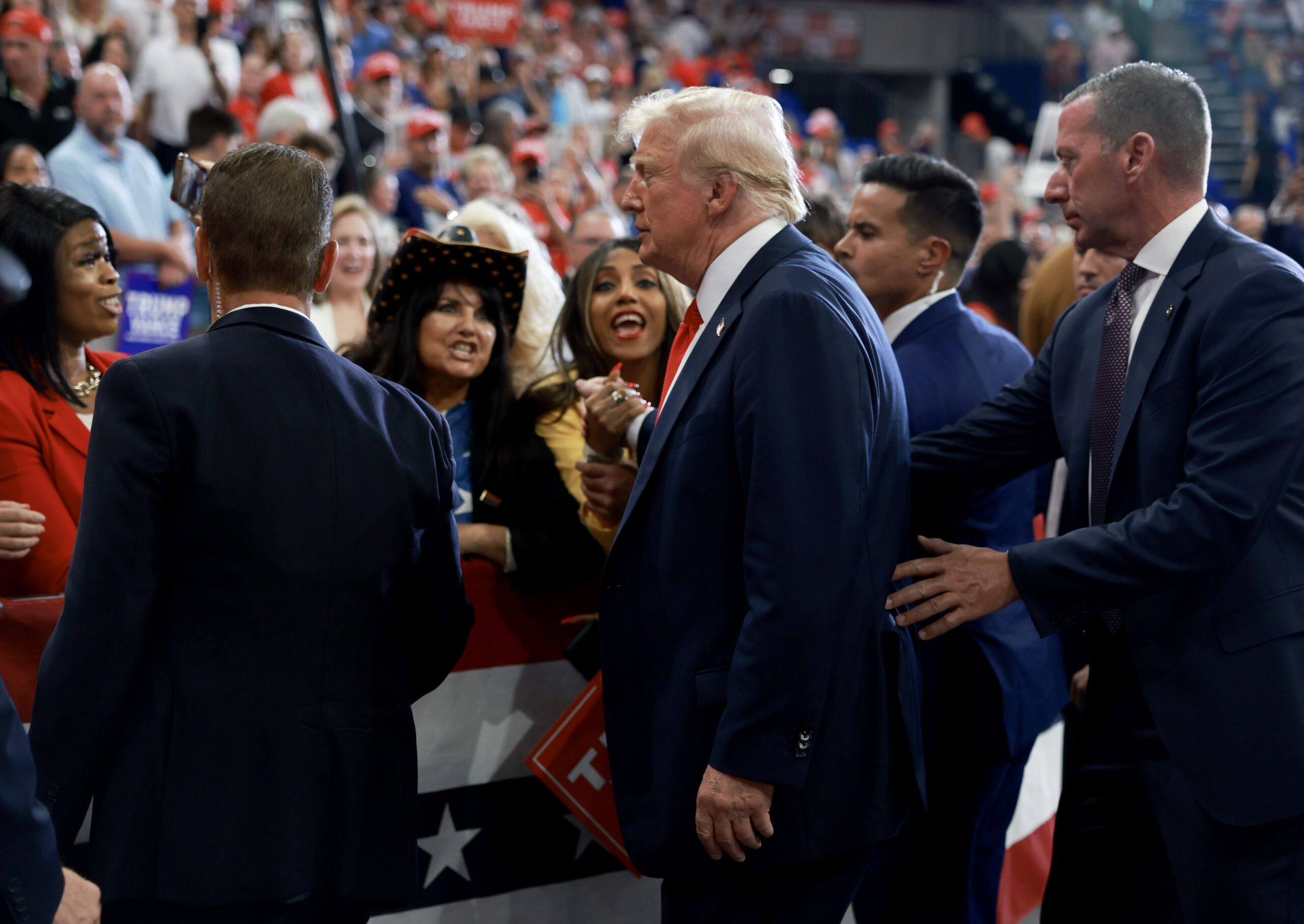
Federal authorities arrested three students from the University of South Alabama after an interagency digital intelligence sweep uncovered alleged threats directed at Donald Trump just hours before he took the stage at an on-campus campaign rally in Mobile, Alabama.
The defendants—identified in federal court filings as Amare Jemal Woods, Cameron Lamark Lewis, and Kayla Leaann Smith—were formally taken into custody following a coordinated operation involving the Federal Bureau of Investigation (FBI), the United States Secret Service, and campus police. Each student faces federal charges under statutory provisions governing threats against major political figures and candidates under Secret Service protection.
The arrests unfolded ahead of the high-security event hosted at the university’s Mitchell Center, a facility rented by the Republican National Committee. The venue, which holds roughly 10,000 attendees, was the site of extensive law enforcement coordination across municipal, state, and federal levels.
II. Social Media Posts Trigger Emergency Disclosures
According to preliminary investigative filings, the alerts surfaced during automated and manual social media intelligence monitoring conducted by security agencies ahead of the visit.
Investigators flagged multiple digital statements originating from campus-area IP addresses referencing violence against the former president, including messages suggesting that an upcoming public appearance provided an opportunity for harm. Authorities filed emergency disclosure requests with online platforms to swiftly trace the user handles to student residential facilities.
University officials issued a statement confirming the arrests took place off the immediate venue grounds and reiterated that the institution cooperated fully with federal law enforcement. The university emphasized that it had no involvement in sponsoring the political rally, serving strictly as a contracted public venue host.
III. Defense Pushback and the Free Speech Debate
While federal prosecutors moved aggressively to secure detention, defense counsel pushed back against the severity of the charges, arguing that federal investigators overreached in conflating hyperbolic online commentary with genuine criminal conspiracy.
Jason Darley, an attorney representing Amare Woods, maintained that his client posed no authentic danger to anyone. Describing Woods as a young undergraduate with no prior criminal background, Darley contended that the student had merely been swept up in the provocative, exaggerated rhetoric common on modern digital platforms.
“He is the furthest thing from an assassin or a domestic threat,” Darley argued, noting that law enforcement found no weapons caches, logistical blueprints, or actionable plots indicating an actual intent to carry out violence.
Legal observers note that post-assassination-attempt security protocols have dramatically lowered the threshold for federal intervention. Following multiple close-range security breaches in recent election cycles, the Secret Service and federal task forces now routinely treat digital threats with immediate prosecutorial detention, warning that online bravado carries identical statutory penalties to in-person threats.
The three students remain in federal custody pending detention and preliminary evidentiary hearings in U.S. District Court in Mobile.

One Comment on “Federal Charges Filed Against Three University of South Alabama Students Over Alleged Threats Ahead of Trump Campus Rally”