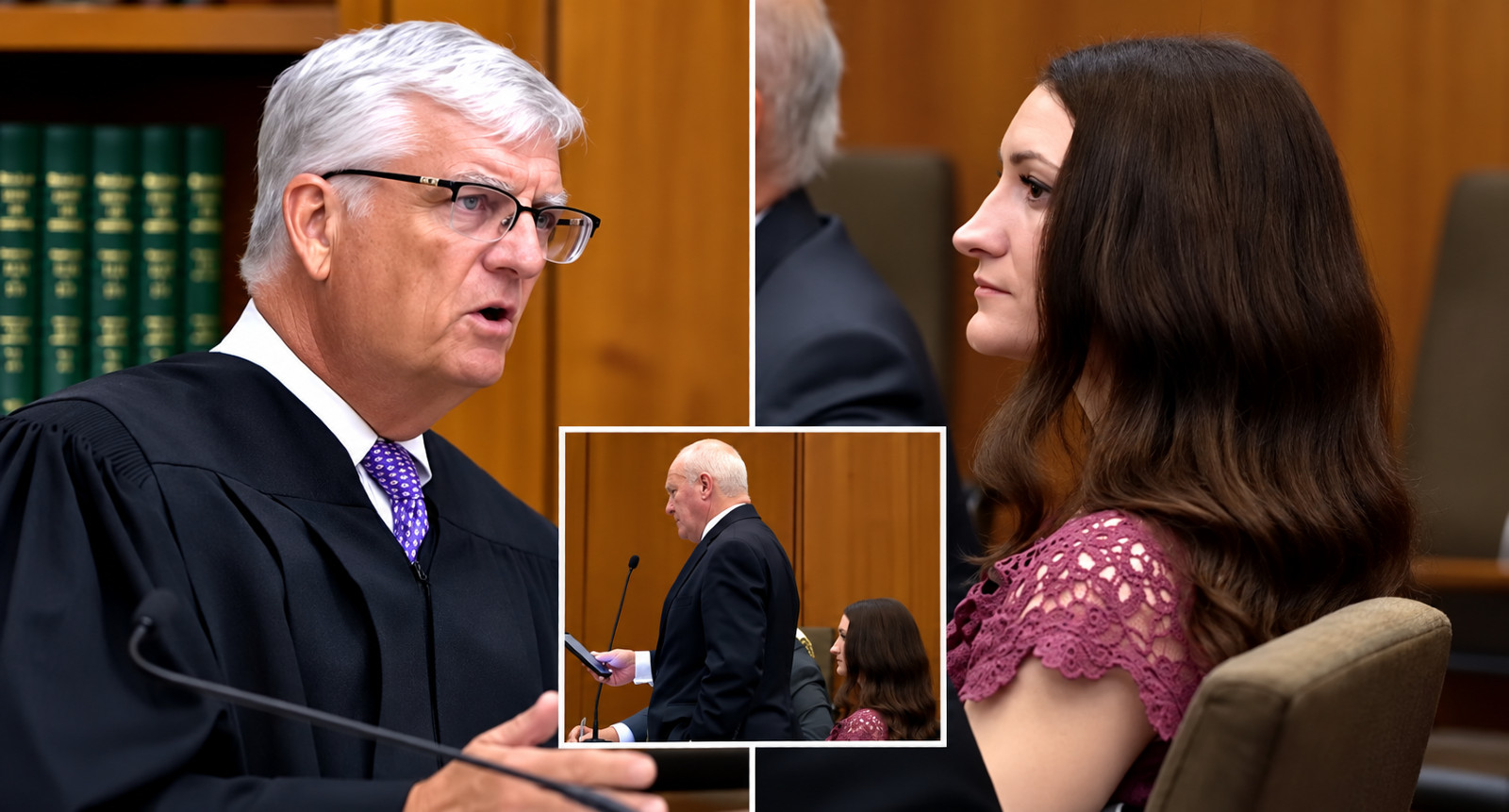
I. A Combative Return to Plymouth Superior Court
Tensions erupted inside Plymouth Superior Court on Tuesday during the first post-trial hearing for Lindsay Clancy, the Massachusetts mother accused of strangling her three young children in January 2023. The proceedings, intended to address post-trial motions and scheduling after an early September mistrial, quickly grew combative, prompting presiding Judge William Sullivan to slam his fist onto the bench to command control of his courtroom.
Resist the Mainstream
“I’m trying to move this as fast as we can,” Judge Sullivan emphasized as attorneys argued over motion deadlines and potential trial schedules.
The physical display of urgency from the bench highlighted the mounting strain surrounding one of the most agonizing, high-profile legal battles in modern Massachusetts history. Just weeks after a jury deadlocked 11–1 following seven days of deliberations, the prosecution and defense clashed not only over future dates, but over the fundamental facts of the case itself.
Resist the Mainstream
II. The Defense’s Sudden About-Face
The primary catalyst for Tuesday’s courtroom friction was a dramatic tactical pivot by veteran defense attorney Kevin Reddington. Filing a motion for a required finding of not guilty under Massachusetts criminal procedure (Rule 25), Reddington stunned prosecutors and observers by asserting that the Commonwealth had failed to introduce any direct proof that Clancy killed her children.
CBS News
“Where is the evidence that she did this? Where is the evidence that she did this?” Reddington challenged in court, as detailed by CBS News Boston. “This entire case is based on speculation. Where is the admission? Where does she say that she did this?”
CBS News+ 1
The argument represented a sharp departure from the foundation of the defense’s five-week trial. Throughout the proceedings, Reddington had never disputed that Clancy was responsible for the deaths of 5-year-old Cora, 3-year-old Dawson, and 8-month-old Callan. Instead, the defense team centered its case entirely on a plea of not criminally responsible due to severe postpartum psychosis, presenting clinical testimony that Clancy suffered hallucinations and command auditory delusions.
AP News+ 1
Prior to the trial, Reddington had even offered to stipulate in writing to her physical involvement in the killings. Yet on Tuesday, he pointed to Clancy’s medical condition upon rescue, her loss of memory following her suicide attempt, and an alleged absence of verbal admissions to argue that the case against her should be dismissed outright.
AP News+ 1
III. Prosecution Fires Back: “Laughable”
Prosecutors offered an immediate, blistering rebuttal. Assistant District Attorney Shanan Buckingham described Reddington’s claim of insufficient evidence as “laughable,” pointing to the mountain of physical, circumstantial, and DNA evidence entered into the trial record.
AP News
“For the first time, the defendant is arguing that there is no evidence she did this,” Buckingham argued, according to reporting by the Associated Press. “I’d suggest to you the entire record is voluminous as to information supporting the fact that she did this.”
AP News
The prosecution reminded the court that Clancy’s DNA was recovered from the exercise bands used to strangle the children. Furthermore, trial testimony demonstrated that she sent her husband on an errand to pick up dinner and medication to create a window of opportunity, and later told a treating psychiatrist that she had planned the acts because a voice told her she had to kill the children.
AP News+ 1
Outside the courthouse, Plymouth County District Attorney Timothy Cruz reiterated his office’s commitment to pursuing the case. “We are going to do what we can for the children,” Cruz stated, as reported by Resist the Mainstream. “It’s about those children and making sure they get justice.”
Resist the Mainstream+ 1
| Case Milestone | Status / Development | Details |
|---|---|---|
| First Trial Verdict | Mistrial Declared (Sept. 4) | Jury deadlocked 11–1 after seven days of deliberation. |
| Jury Breakdown | 11 Not Guilty / 1 Guilty | 11 jurors supported insanity; 1 juror held out for murder. |
| Rule 25 Motion | Denied by Judge Sullivan | Court ruled evidence sufficient for rational trier of fact. |
| Next Hearing | Scheduled for November 2 | Parties to confer on retrial readiness and outstanding defense motions. |
IV. The Holdout Juror and the Path Toward Retrial
The courtroom friction also reflects the shadow cast by the original jury’s deadlocked conclusion. Following the trial, jurors revealed that 11 members favored finding Clancy not criminally responsible by reason of insanity. A single holdout juror, Michael Desronvil, steadfastly refused to acquit, ultimately causing the mistrial.
Resist the Mainstream+ 1
Reddington has since filed separate motions alleging juror misconduct, arguing that Desronvil should have been dismissed when the jury foreperson complained he was ignoring judicial instructions on reasonable doubt. The defense has also hinted at double jeopardy arguments to block any second trial from proceeding.
AP News+ 1
Judge Sullivan brought an end to Tuesday’s debate by formally denying the defense’s long-shot motion for an acquittal. In his written ruling, Sullivan noted that under Massachusetts law, the evidence at this stage must be evaluated in the light most favorable to the Commonwealth.
CBS News
Setting the next status hearing for November 2, Judge Sullivan instructed both legal teams to return prepared to establish firm deadlines for a potential retrial, signaling that while passions remain high, the legal clock will not stop.
Resist the Mainstream
CBS News Report on Defense Attorney Reddington’s Courtroom Arguments
YouTube
This video provides broadcast reporting and analysis of defense attorney Kevin Reddington’s unexpected argument regarding the sufficiency of evidence during the hearing before Judge William Sullivan.




One Comment on “Fist on the Bench: Judge Pushes Past Delays in Tense First Court Hearing Since Lindsay Clancy Mistrial”